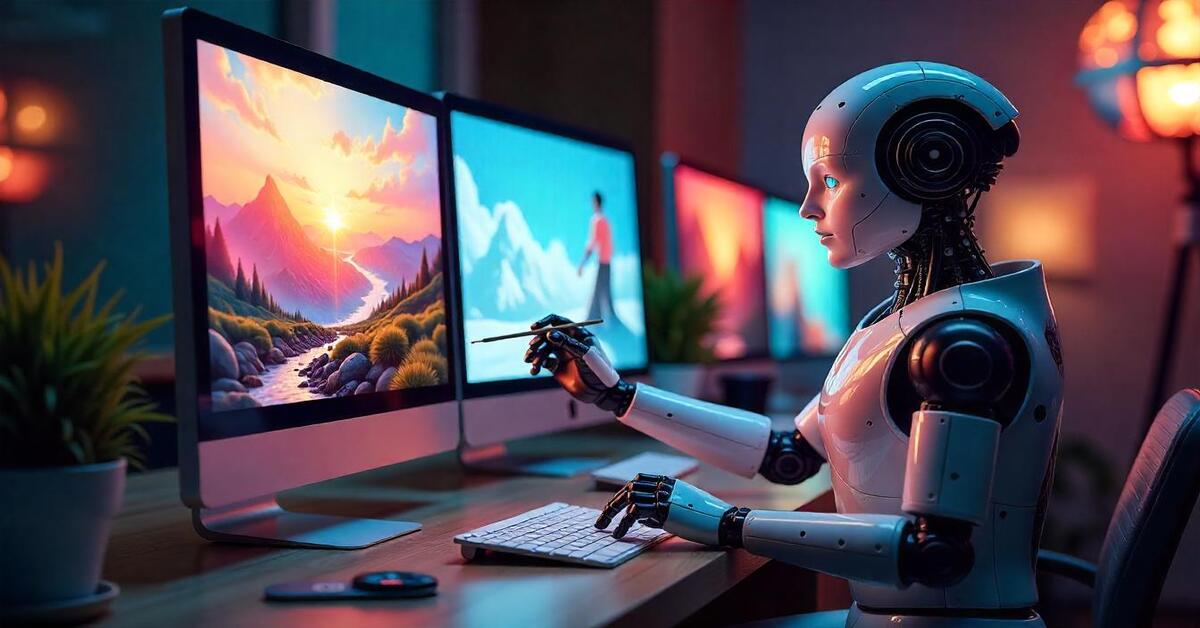

Best AI Image Generators in 2026: Ultimate Guide
The best AI image generators in 2026 include Midjourney, ChatGPT, Adobe Firefly, Google Imagen, Ideogram, Leonardo AI, Flux, Canva AI, Recraft, and Stable Diffusion. These AI-powered image generation tools help creators, businesses, marketers, designers, photographers, developers, and artists produce high-quality visuals from simple text prompts. Whether you need photorealistic images, digital artwork, marketing graphics, social media content, logos, product mockups, or concept art, the right AI image generator depends on your creative goals, editing needs, licensing requirements, and workflow.
Introduction
Artificial intelligence has completely transformed digital image creation.
Designers no longer need to spend hours creating concepts from scratch, marketers can produce campaign visuals in minutes, entrepreneurs can generate professional branding assets without hiring large creative teams, and content creators can publish eye-catching graphics faster than ever before.
Modern AI image generators convert simple text prompts into realistic photographs, illustrations, concept art, product mockups, logos, icons, social media graphics, marketing visuals, and creative designs.
Instead of relying entirely on traditional graphic design software, users can now describe an idea in natural language and receive multiple high-quality image variations within seconds.
AI image generators are now widely used by:
- Graphic designers
- Digital artists
- Marketing agencies
- Content creators
- Bloggers
- Small businesses
- eCommerce brands
- Social media managers
- Developers
- Creative professionals
These platforms dramatically reduce production time while expanding creative possibilities.
However, every AI image generator excels in different areas.
Some specialize in photorealistic images.
Others focus on illustrations, typography, logo design, commercial licensing, creative artwork, or professional marketing assets.
Choosing the best AI image generator requires understanding image quality, prompt accuracy, editing features, style control, commercial usage rights, pricing, and workflow compatibility.
This comprehensive guide compares the best AI image generators in 2026 to help creators, designers, marketers, businesses, agencies, and professionals choose the right AI platform for their creative projects.
Why AI Image Generators Matter
Visual content has become essential across nearly every industry.
Businesses use images to market products.
Creators publish engaging social media graphics.
Agencies produce advertising campaigns.
Developers create application assets.
Publishers illustrate articles.
Educators build visual learning materials.
Traditional image creation often involves:
- Graphic design
- Illustration
- Photography
- Editing
- Stock image searches
- Background removal
- Retouching
- Branding
- Multiple software tools
- Long production timelines
AI image generators automate much of this work, allowing creators to focus on ideas instead of repetitive production tasks.
Organizations increasingly use AI image generation to improve:
- Marketing efficiency
- Creative productivity
- Brand consistency
- Content creation
- Product visualization
- Advertising
- Social media publishing
- Website design
- Presentation creation
- Creative experimentation
Rather than replacing designers, AI serves as a powerful creative assistant that accelerates visual production.
What Are AI Image Generators?
AI image generators are software platforms that create digital images from text descriptions using advanced artificial intelligence models.
Unlike traditional design software that requires manual creation, AI generators understand natural language prompts and automatically produce images matching the requested concept.
Depending on the platform, AI can generate:
- Photorealistic images
- Digital paintings
- Illustrations
- Concept art
- Product mockups
- Logos
- Icons
- Characters
- Backgrounds
- Marketing graphics
- Social media visuals
- Website graphics
Many platforms also provide editing capabilities such as:
- Image expansion
- Background replacement
- Object removal
- Style transfer
- Inpainting
- Upscaling
- Color adjustments
- Prompt refinement
- Image variations
- AI-assisted editing
How AI Is Transforming Creative Design
Artificial intelligence is improving nearly every stage of digital content creation.
Faster Visual Production
Generate high-quality artwork within seconds.
Better Creative Exploration
Experiment with multiple design directions quickly.
Improved Marketing
Produce campaign graphics faster.
Stronger Branding
Create consistent visual identities.
More Accessible Design
Enable non-designers to create professional visuals.
Rapid Content Creation
Support blogs, websites, social media, advertising, and presentations.
Benefits of AI Image Generators
Businesses and creators using AI image generators often experience significant productivity improvements.
Accelerated Creative Work
Reduce image production time dramatically.
Lower Design Costs
Generate professional visuals without expensive software or large design teams.
Creative Inspiration
Explore new visual ideas rapidly.
Marketing Efficiency
Produce social media graphics, advertisements, and promotional materials faster.
Consistent Branding
Generate visuals aligned with brand identity.
Scalable Content Production
Create large volumes of high-quality visual assets efficiently.
Responsible Use of AI Image Generators
Although AI image generation dramatically increases creative productivity, responsible use remains essential.
Creators should:
- Review generated images carefully.
- Verify factual accuracy when appropriate.
- Respect copyright and licensing requirements.
- Avoid misleading visual content.
- Protect confidential information.
- Maintain brand consistency.
- Credit human creative contributions where appropriate.
- Review commercial usage terms.
- Edit AI-generated images before publication.
- Follow ethical content guidelines.
AI should enhance creative workflows rather than replace human artistic judgment.
How We Evaluated the Best AI Image Generators
Each platform was evaluated using practical creative and professional criteria.
Image Quality
How realistic, detailed, and visually appealing are generated images?
Prompt Accuracy
How well does the AI understand user instructions?
Style Control
Can users generate different artistic styles consistently?
Editing Features
Does the platform support image refinement and post-generation editing?
Commercial Usage
Are generated images suitable for business use?
Ease of Use
Can beginners create high-quality images quickly?
Creative Flexibility
Does the platform support diverse creative workflows?
Overall Value
Does it provide excellent capabilities relative to pricing?
Comparison Table: Best AI Image Generators in 2026
| AI Image Generator | Best For | Overall Rating |
|---|---|---|
| Midjourney | Overall Image Quality | 9.9/10 |
| ChatGPT | AI Image Creation & Editing | 9.9/10 |
| Adobe Firefly | Commercial Design | 9.8/10 |
| Google Imagen | Photorealistic Images | 9.8/10 |
| Ideogram | Typography & Text | 9.8/10 |
| Leonardo AI | Creative Assets | 9.7/10 |
| Flux | Image Generation | 9.7/10 |
| Canva AI | Marketing Graphics | 9.7/10 |
| Recraft | Brand Design | 9.7/10 |
| Stable Diffusion | Open-Source Flexibility | 9.7/10 |
Midjourney Review
Why Midjourney Remains the Gold Standard for AI Art
Midjourney has become one of the most respected AI image generators because of its exceptional artistic quality, cinematic compositions, lighting, textures, and creative interpretation of prompts.
Artists, designers, agencies, publishers, and marketing professionals consistently use Midjourney to produce premium visual content for commercial and creative projects.
Its ability to generate visually stunning images with minimal prompting has established it as one of the industry’s leading AI image generation platforms.
What Makes Midjourney Different?
Midjourney emphasizes artistic excellence and visual storytelling.
Users commonly create:
- Digital artwork
- Concept art
- Character designs
- Fantasy illustrations
- Product concepts
- Marketing visuals
- Editorial illustrations
- Book covers
- Website graphics
- Advertising imagery
Its strong prompt interpretation allows creators to generate sophisticated visual styles with remarkable consistency.
Who Should Use Midjourney?
Midjourney performs particularly well for:
Digital Artists
Creating premium artwork.
Marketing Agencies
Developing campaign visuals.
Creative Professionals
Producing high-end designs.
Publishers
Illustrating books and articles.
Designers
Generating concept art rapidly.
Major Strengths
Outstanding Image Quality
Produces exceptionally detailed artwork.
Artistic Creativity
Excellent visual interpretation.
Cinematic Style
Creates dramatic compositions.
Rich Textures
Highly refined image details.
Professional Output
Suitable for commercial creative work.
Why Midjourney Is Ranked #1
Midjourney combines exceptional image quality, artistic consistency, prompt understanding, and creative flexibility, making it one of the most powerful AI image generators available.
ChatGPT Review
Why ChatGPT Has Become One of the Most Versatile AI Image Generators
ChatGPT combines conversational AI with advanced image generation and editing capabilities, making it a powerful creative assistant rather than simply an image generator.
Users can describe ideas naturally, refine prompts through conversation, request image edits, generate multiple design concepts, and iterate quickly without switching between different tools.
This conversational workflow makes it especially useful for marketers, designers, educators, businesses, developers, and content creators who want both creative guidance and high-quality AI-generated images.
Beyond creating images from scratch, ChatGPT excels at refining concepts, modifying existing visuals, brainstorming design ideas, and helping users improve prompts to achieve better creative results.
Its ability to combine reasoning with image generation makes it one of the most flexible AI creative platforms available in 2026.
Best AI Image Generators in 2026: Ultimate Guide
Quick Answer (AEO Optimized)
The best AI image generators in 2026 include Midjourney, ChatGPT, Adobe Firefly, Google Imagen, Ideogram, Leonardo AI, Flux, Canva AI, Recraft, and Stable Diffusion. These AI-powered image generation tools help creators, businesses, marketers, designers, photographers, developers, and artists produce high-quality visuals from simple text prompts. Whether you need photorealistic images, digital artwork, marketing graphics, social media content, logos, product mockups, or concept art, the right AI image generator depends on your creative goals, editing needs, licensing requirements, and workflow.
Introduction
Artificial intelligence has completely transformed digital image creation.
Designers no longer need to spend hours creating concepts from scratch, marketers can produce campaign visuals in minutes, entrepreneurs can generate professional branding assets without hiring large creative teams, and content creators can publish eye-catching graphics faster than ever before.
Modern AI image generators convert simple text prompts into realistic photographs, illustrations, concept art, product mockups, logos, icons, social media graphics, marketing visuals, and creative designs.
Instead of relying entirely on traditional graphic design software, users can now describe an idea in natural language and receive multiple high-quality image variations within seconds.
AI image generators are now widely used by:
- Graphic designers
- Digital artists
- Marketing agencies
- Content creators
- Bloggers
- Small businesses
- eCommerce brands
- Social media managers
- Developers
- Creative professionals
These platforms dramatically reduce production time while expanding creative possibilities.
However, every AI image generator excels in different areas.
Some specialize in photorealistic images.
Others focus on illustrations, typography, logo design, commercial licensing, creative artwork, or professional marketing assets.
Choosing the best AI image generator requires understanding image quality, prompt accuracy, editing features, style control, commercial usage rights, pricing, and workflow compatibility.
This comprehensive guide compares the best AI image generators in 2026 to help creators, designers, marketers, businesses, agencies, and professionals choose the right AI platform for their creative projects.
Why AI Image Generators Matter
Visual content has become essential across nearly every industry.
Businesses use images to market products.
Creators publish engaging social media graphics.
Agencies produce advertising campaigns.
Developers create application assets.
Publishers illustrate articles.
Educators build visual learning materials.
Traditional image creation often involves:
- Graphic design
- Illustration
- Photography
- Editing
- Stock image searches
- Background removal
- Retouching
- Branding
- Multiple software tools
- Long production timelines
AI image generators automate much of this work, allowing creators to focus on ideas instead of repetitive production tasks.
Organizations increasingly use AI image generation to improve:
- Marketing efficiency
- Creative productivity
- Brand consistency
- Content creation
- Product visualization
- Advertising
- Social media publishing
- Website design
- Presentation creation
- Creative experimentation
Rather than replacing designers, AI serves as a powerful creative assistant that accelerates visual production.
What Are AI Image Generators?
AI image generators are software platforms that create digital images from text descriptions using advanced artificial intelligence models.
Unlike traditional design software that requires manual creation, AI generators understand natural language prompts and automatically produce images matching the requested concept.
Depending on the platform, AI can generate:
- Photorealistic images
- Digital paintings
- Illustrations
- Concept art
- Product mockups
- Logos
- Icons
- Characters
- Backgrounds
- Marketing graphics
- Social media visuals
- Website graphics
Many platforms also provide editing capabilities such as:
- Image expansion
- Background replacement
- Object removal
- Style transfer
- Inpainting
- Upscaling
- Color adjustments
- Prompt refinement
- Image variations
- AI-assisted editing
How AI Is Transforming Creative Design
Artificial intelligence is improving nearly every stage of digital content creation.
Faster Visual Production
Generate high-quality artwork within seconds.
Better Creative Exploration
Experiment with multiple design directions quickly.
Improved Marketing
Produce campaign graphics faster.
Stronger Branding
Create consistent visual identities.
More Accessible Design
Enable non-designers to create professional visuals.
Rapid Content Creation
Support blogs, websites, social media, advertising, and presentations.
Benefits of AI Image Generators
Businesses and creators using AI image generators often experience significant productivity improvements.
Accelerated Creative Work
Reduce image production time dramatically.
Lower Design Costs
Generate professional visuals without expensive software or large design teams.
Creative Inspiration
Explore new visual ideas rapidly.
Marketing Efficiency
Produce social media graphics, advertisements, and promotional materials faster.
Consistent Branding
Generate visuals aligned with brand identity.
Scalable Content Production
Create large volumes of high-quality visual assets efficiently.
Responsible Use of AI Image Generators
Although AI image generation dramatically increases creative productivity, responsible use remains essential.
Creators should:
- Review generated images carefully.
- Verify factual accuracy when appropriate.
- Respect copyright and licensing requirements.
- Avoid misleading visual content.
- Protect confidential information.
- Maintain brand consistency.
- Credit human creative contributions where appropriate.
- Review commercial usage terms.
- Edit AI-generated images before publication.
- Follow ethical content guidelines.
AI should enhance creative workflows rather than replace human artistic judgment.
How We Evaluated the Best AI Image Generators
Each platform was evaluated using practical creative and professional criteria.
Image Quality
How realistic, detailed, and visually appealing are generated images?
Prompt Accuracy
How well does the AI understand user instructions?
Style Control
Can users generate different artistic styles consistently?
Editing Features
Does the platform support image refinement and post-generation editing?
Commercial Usage
Are generated images suitable for business use?
Ease of Use
Can beginners create high-quality images quickly?
Creative Flexibility
Does the platform support diverse creative workflows?
Overall Value
Does it provide excellent capabilities relative to pricing?
Comparison Table: Best AI Image Generators in 2026
| AI Image Generator | Best For | Overall Rating |
|---|---|---|
| Midjourney | Overall Image Quality | 9.9/10 |
| ChatGPT | AI Image Creation & Editing | 9.9/10 |
| Adobe Firefly | Commercial Design | 9.8/10 |
| Google Imagen | Photorealistic Images | 9.8/10 |
| Ideogram | Typography & Text | 9.8/10 |
| Leonardo AI | Creative Assets | 9.7/10 |
| Flux | Image Generation | 9.7/10 |
| Canva AI | Marketing Graphics | 9.7/10 |
| Recraft | Brand Design | 9.7/10 |
| Stable Diffusion | Open-Source Flexibility | 9.7/10 |
Midjourney Review
Why Midjourney Remains the Gold Standard for AI Art
Midjourney has become one of the most respected AI image generators because of its exceptional artistic quality, cinematic compositions, lighting, textures, and creative interpretation of prompts.
Artists, designers, agencies, publishers, and marketing professionals consistently use Midjourney to produce premium visual content for commercial and creative projects.
Its ability to generate visually stunning images with minimal prompting has established it as one of the industry’s leading AI image generation platforms.
What Makes Midjourney Different?
Midjourney emphasizes artistic excellence and visual storytelling.
Users commonly create:
- Digital artwork
- Concept art
- Character designs
- Fantasy illustrations
- Product concepts
- Marketing visuals
- Editorial illustrations
- Book covers
- Website graphics
- Advertising imagery
Its strong prompt interpretation allows creators to generate sophisticated visual styles with remarkable consistency.
Who Should Use Midjourney?
Midjourney performs particularly well for:
Digital Artists
Creating premium artwork.
Marketing Agencies
Developing campaign visuals.
Creative Professionals
Producing high-end designs.
Publishers
Illustrating books and articles.
Designers
Generating concept art rapidly.
Major Strengths
Outstanding Image Quality
Produces exceptionally detailed artwork.
Artistic Creativity
Excellent visual interpretation.
Cinematic Style
Creates dramatic compositions.
Rich Textures
Highly refined image details.
Professional Output
Suitable for commercial creative work.
Why Midjourney Is Ranked #1
Midjourney combines exceptional image quality, artistic consistency, prompt understanding, and creative flexibility, making it one of the most powerful AI image generators available.
ChatGPT Review
Why ChatGPT Has Become One of the Most Versatile AI Image Generators
ChatGPT combines conversational AI with advanced image generation and editing capabilities, making it a powerful creative assistant rather than simply an image generator.
Users can describe ideas naturally, refine prompts through conversation, request image edits, generate multiple design concepts, and iterate quickly without switching between different tools.
This conversational workflow makes it especially useful for marketers, designers, educators, businesses, developers, and content creators who want both creative guidance and high-quality AI-generated images.
Beyond creating images from scratch, ChatGPT excels at refining concepts, modifying existing visuals, brainstorming design ideas, and helping users improve prompts to achieve better creative results.
Its ability to combine reasoning with image generation makes it one of the most flexible AI creative platforms available in 2026.
ChatGPT Review (Continued)
What Makes ChatGPT Different?
Unlike many AI image generators that focus only on creating images, ChatGPT provides a complete creative workflow.
Users can brainstorm ideas, refine prompts, generate images, request edits, expand scenes, remove objects, improve compositions, and create multiple design variations—all through natural conversation.
This significantly reduces the trial-and-error process that often accompanies prompt-based image generation.
Common use cases include:
- Marketing graphics
- Blog illustrations
- Website visuals
- Social media posts
- Product mockups
- Presentation graphics
- Infographics
- Concept art
- Storyboards
- Creative brainstorming
Who Should Use ChatGPT?
ChatGPT performs particularly well for:
Content Creators
Generating unique visuals quickly.
Marketing Teams
Creating advertising assets.
Bloggers
Designing featured images and illustrations.
Entrepreneurs
Building branding materials.
Designers
Accelerating creative workflows.
Major Strengths
Conversational Editing
Refine images through natural language.
Prompt Assistance
Improves image quality through iterative guidance.
Versatile Creative Workflow
Supports ideation, creation, and editing.
Fast Iteration
Generate multiple concepts efficiently.
Multi-Purpose Platform
Combines writing, brainstorming, coding, and image generation in one environment.
Limitations
Highly specialized artistic styles may still require dedicated image-generation platforms for maximum stylistic control.
Final Verdict on ChatGPT
ChatGPT is one of the most flexible AI creative tools available, combining intelligent conversation with powerful image generation and editing capabilities.
Adobe Firefly Review
Why Adobe Firefly Is Trusted by Creative Professionals
Adobe Firefly extends Adobe’s creative ecosystem by bringing AI-powered image generation directly into professional design workflows.
Integrated with popular Adobe applications, Firefly enables creators to generate images, expand canvases, remove objects, create design assets, and accelerate creative production while maintaining compatibility with existing design projects.
Its emphasis on commercial safety and professional design workflows makes it particularly attractive to agencies and enterprise creative teams.
What Makes Adobe Firefly Different?
Adobe Firefly focuses on professional creative production.
Users commonly create:
- Marketing graphics
- Product visuals
- Brand assets
- Website graphics
- Advertising creatives
- Social media content
- Illustrations
- Presentation visuals
- Print designs
- Creative concepts
Who Should Use Adobe Firefly?
Adobe Firefly performs particularly well for:
Graphic Designers
Enhancing professional workflows.
Creative Agencies
Producing commercial artwork.
Marketing Teams
Developing campaigns.
Brand Managers
Maintaining visual consistency.
Enterprise Organizations
Supporting large creative operations.
Major Strengths
Adobe Integration
Works naturally within Adobe Creative Cloud.
Commercial-Friendly Workflow
Designed for business use.
AI Editing
Supports advanced image modifications.
Professional Quality
Excellent for production environments.
Productivity
Accelerates creative projects.
Limitations
Users outside the Adobe ecosystem may find standalone AI platforms more convenient.
Final Verdict on Adobe Firefly
Adobe Firefly is among the best AI image generators for designers and businesses seeking AI-enhanced professional design workflows.
Google Imagen Review
Why Google Imagen Produces Outstanding Photorealism
Google Imagen has gained recognition for generating remarkably realistic images with exceptional prompt accuracy, lighting, textures, and object relationships.
Its advanced understanding of language allows users to describe complex scenes while receiving visually coherent, highly detailed results.
Google’s ongoing AI research continues to improve Imagen’s ability to generate realistic photography, artistic illustrations, and creative visual concepts.
What Makes Google Imagen Different?
Google Imagen emphasizes realism and prompt fidelity.
Users commonly generate:
- Photorealistic scenes
- Lifestyle photography
- Product visuals
- Advertising images
- Nature photography
- Editorial graphics
- Marketing content
- Concept illustrations
- Website imagery
- Business visuals
Who Should Use Google Imagen?
Google Imagen performs particularly well for:
Marketing Professionals
Producing realistic campaign visuals.
Businesses
Creating commercial imagery.
Designers
Developing high-quality concepts.
Advertisers
Generating promotional graphics.
Content Creators
Producing visually engaging assets.
Major Strengths
Exceptional Realism
Produces highly convincing imagery.
Prompt Understanding
Accurately interprets detailed instructions.
Natural Lighting
Excellent visual consistency.
Rich Detail
High-quality image rendering.
Research Leadership
Benefits from ongoing AI innovation.
Limitations
Creative users seeking highly stylized artistic aesthetics may also explore dedicated art-focused generators.
Final Verdict on Google Imagen
Google Imagen is one of the strongest AI image generators for realistic commercial visuals and professional-quality photography.
Ideogram Review
Why Ideogram Excels at Typography and Text Rendering
Many AI image generators struggle to produce readable text within images.
Ideogram distinguishes itself by accurately generating typography, logos, posters, advertisements, product packaging, social media graphics, and marketing materials containing written text.
Its ability to combine graphic design with reliable text rendering makes it particularly valuable for branding and promotional content.
What Makes Ideogram Different?
Ideogram specializes in integrating text with imagery.
Users commonly create:
- Logos
- Posters
- Advertisements
- Social media graphics
- Product packaging
- Branding assets
- Website banners
- Presentation graphics
- Marketing campaigns
- Promotional materials
Who Should Use Ideogram?
Ideogram performs particularly well for:
Brand Designers
Creating logos and identity assets.
Marketing Teams
Producing promotional graphics.
Social Media Managers
Generating engaging posts.
Small Businesses
Designing advertising materials.
Content Creators
Building branded visuals.
Major Strengths
Excellent Typography
Produces readable text inside images.
Branding Support
Strong logo and marketing capabilities.
Graphic Design
Ideal for promotional materials.
Creative Flexibility
Supports multiple visual styles.
Marketing Efficiency
Accelerates branded content creation.
Limitations
Artists focused primarily on highly detailed illustrations may also use specialized artistic AI generators.
Final Verdict on Ideogram
Ideogram is one of the best AI image generators for branding, typography, marketing graphics, and professional visual communication.
Comparing the Leading AI Image Generators
Midjourney vs ChatGPT
Midjourney emphasizes artistic excellence and cinematic visual quality.
ChatGPT provides a broader creative workflow by combining conversational prompt refinement, image generation, and editing capabilities.
Creative professionals often use both together for ideation and production.
Adobe Firefly vs Canva AI
Adobe Firefly focuses on professional creative production and advanced editing workflows.
Canva AI prioritizes ease of use, quick marketing content, and business-friendly design.
Google Imagen vs Midjourney
Google Imagen excels at photorealistic imagery and prompt accuracy.
Midjourney remains a leading choice for artistic interpretation and visually dramatic compositions.
Ideogram vs Adobe Firefly
Ideogram performs exceptionally well when typography and readable text are essential.
Adobe Firefly provides broader professional design capabilities integrated into Adobe’s creative ecosystem.
Building an Effective AI Creative Workflow
Many creators combine several AI platforms instead of relying on a single image generator.
A productive workflow may include:
- ChatGPT for brainstorming ideas and refining prompts.
- Midjourney for premium artistic visuals.
- Adobe Firefly for commercial design projects.
- Google Imagen for photorealistic imagery.
- Ideogram for typography-rich graphics.
Using specialized AI tools together enables creators to achieve higher-quality results while improving creative efficiency.
Responsible AI Image Creation
Professional image generation requires thoughtful human oversight.
Creators should:
- Review every generated image carefully.
- Verify branding accuracy.
- Respect copyright and licensing terms.
- Avoid deceptive visual content.
- Protect confidential information.
- Maintain ethical creative standards.
- Confirm commercial usage permissions.
- Edit AI-generated assets when appropriate.
- Ensure accessibility where relevant.
- Keep original project files organized.
Responsible use helps organizations produce trustworthy, professional visual content while maximizing the benefits of AI-assisted creativity.
Leonardo AI Review
Why Leonardo AI Is a Favorite Among Creators
Leonardo AI has become one of the most popular AI image generators for creators who need flexibility, customization, and production-ready visuals.
Unlike platforms that focus only on generating single images, Leonardo AI provides an extensive creative toolkit that includes model selection, image editing, prompt enhancement, style consistency, asset generation, and workflow optimization.
It is widely used by game studios, designers, marketers, agencies, and content creators who require large volumes of professional-quality visual assets.
What Makes Leonardo AI Different?
Leonardo AI combines powerful image generation with creative production tools.
Users commonly create:
- Game assets
- Character designs
- Fantasy artwork
- Concept art
- Product mockups
- Website graphics
- Social media visuals
- Book illustrations
- Marketing materials
- Brand assets
Who Should Use Leonardo AI?
Leonardo AI performs particularly well for:
Game Developers
Creating environments and assets.
Digital Artists
Producing concept artwork.
Marketing Teams
Designing campaign visuals.
Agencies
Generating client assets.
Entrepreneurs
Creating business graphics quickly.
Major Strengths
High Image Quality
Produces detailed professional visuals.
Creative Control
Supports advanced prompt customization.
Multiple AI Models
Offers flexibility for different projects.
Asset Production
Excellent for large creative workflows.
Consistent Output
Maintains style across projects.
Limitations
New users may require some time to learn the platform’s advanced options.
Final Verdict on Leonardo AI
Leonardo AI is one of the strongest AI image generators for creators who require high-quality assets with extensive customization options.
Flux Review
Why Flux Has Gained Attention
Flux represents a new generation of AI image models focused on producing highly detailed, realistic, and prompt-accurate visuals.
Its advanced architecture enables creators to generate complex scenes while maintaining impressive consistency across lighting, anatomy, textures, and composition.
Many professionals now include Flux in their creative workflow because of its balance between image quality and prompt understanding.
What Makes Flux Different?
Flux emphasizes realistic image generation with excellent prompt interpretation.
Users commonly create:
- Realistic portraits
- Product photography
- Marketing visuals
- Editorial illustrations
- Lifestyle images
- Advertising graphics
- Website visuals
- Commercial artwork
- Creative concepts
- Social media content
Who Should Use Flux?
Flux performs particularly well for:
Commercial Designers
Producing client work.
Advertisers
Creating promotional visuals.
Businesses
Generating professional imagery.
Content Creators
Developing engaging graphics.
Marketing Agencies
Producing campaign assets.
Major Strengths
Excellent Prompt Accuracy
Generates reliable results.
Strong Photorealism
Produces convincing imagery.
High Detail
Rich textures and composition.
Modern Architecture
Benefits from advanced AI research.
Professional Results
Suitable for commercial workflows.
Limitations
Specialized artistic styles may require additional prompt refinement.
Final Verdict on Flux
Flux is an excellent AI image model for users seeking realism, consistency, and professional-quality image generation.
Canva AI Review
Why Canva AI Is Ideal for Everyday Content Creation
Canva AI extends the familiar Canva design platform by adding intelligent image generation, design suggestions, content assistance, and visual editing.
Instead of requiring advanced design knowledge, Canva AI enables users to create attractive marketing materials, presentations, social media graphics, posters, and branded content through simple prompts and drag-and-drop editing.
Its accessibility makes it one of the most widely adopted AI design tools for businesses and educators.
What Makes Canva AI Different?
Canva AI combines AI image generation with a complete design ecosystem.
Users commonly create:
- Social media graphics
- Presentations
- Infographics
- Posters
- Marketing materials
- Website banners
- Business cards
- Flyers
- Educational resources
- Brand content
Who Should Use Canva AI?
Canva AI performs particularly well for:
Small Businesses
Creating marketing assets.
Educators
Designing learning materials.
Social Media Managers
Publishing engaging visuals.
Entrepreneurs
Developing brand graphics.
Beginners
Learning AI-assisted design.
Major Strengths
Beginner Friendly
Very easy to use.
Integrated Templates
Large design library.
Brand Management
Supports consistent branding.
Collaboration
Excellent team workflow.
Fast Content Production
Ideal for marketing.
Limitations
Professional illustrators may require more advanced artistic generation tools.
Final Verdict on Canva AI
Canva AI is one of the best AI design platforms for businesses, educators, marketers, and everyday content creators.
Recraft Review
Why Recraft Excels in Brand Design
Recraft focuses on creating scalable brand assets, vector graphics, illustrations, icons, logos, and marketing visuals.
Unlike many AI image generators that prioritize artistic images, Recraft emphasizes professional graphic design suitable for branding and commercial communication.
Its vector capabilities make it particularly valuable for designers producing logos and print-ready assets.
What Makes Recraft Different?
Recraft specializes in AI-assisted brand design.
Users commonly create:
- Logos
- Icons
- Vector illustrations
- Brand graphics
- Product packaging
- Marketing visuals
- Website assets
- Social media graphics
- Presentation illustrations
- Business branding
Who Should Use Recraft?
Recraft performs particularly well for:
Brand Designers
Creating visual identities.
Agencies
Producing client branding.
Marketing Teams
Designing promotional materials.
Entrepreneurs
Building professional brands.
Graphic Designers
Creating scalable assets.
Major Strengths
Vector Graphics
Produces scalable artwork.
Brand Consistency
Excellent design control.
Professional Assets
Suitable for commercial branding.
Clean Illustrations
High-quality graphics.
Efficient Workflow
Speeds up design production.
Limitations
Users focused primarily on photorealistic artwork may prefer specialized image-generation models.
Final Verdict on Recraft
Recraft is one of the strongest AI platforms for professional branding, vector graphics, and business design assets.
Stable Diffusion Review
Why Stable Diffusion Remains an Open-Source Leader
Stable Diffusion transformed AI image generation by providing an open-source model that developers, researchers, artists, and businesses can customize extensively.
Its flexibility has created one of the largest AI creative communities, with thousands of custom models, workflows, and specialized applications.
Unlike many closed platforms, Stable Diffusion allows experienced users to fine-tune models and build highly customized creative pipelines.
What Makes Stable Diffusion Different?
Stable Diffusion emphasizes openness and customization.
Users commonly create:
- Digital artwork
- Photorealistic images
- Character designs
- Product concepts
- Game assets
- Marketing graphics
- Scientific illustrations
- Architectural visualization
- Fashion concepts
- AI research projects
Who Should Use Stable Diffusion?
Stable Diffusion performs particularly well for:
Developers
Building custom AI workflows.
Researchers
Experimenting with AI models.
Artists
Creating unique styles.
Businesses
Deploying private AI solutions.
Advanced Users
Customizing image generation.
Major Strengths
Open Source
Highly customizable.
Large Community
Extensive shared resources.
Model Flexibility
Supports specialized workflows.
Research Friendly
Strong developer ecosystem.
Creative Freedom
Wide artistic possibilities.
Limitations
Beginners may find setup and customization more challenging than cloud-based AI platforms.
Final Verdict on Stable Diffusion
Stable Diffusion remains one of the most powerful AI image generation platforms for developers, researchers, and advanced creative professionals.
Best AI Image Generators for Beginners
Best Overall
ChatGPT
Easy conversational workflow with image generation and editing.
Best Beginner Design Tool
Canva AI
Simple interface with templates.
Best Fast Image Creation
Adobe Firefly
Professional quality with minimal learning curve.
Best AI Image Generators for Designers
Best Overall
Midjourney
Outstanding artistic quality.
Best Professional Workflow
Adobe Firefly
Excellent commercial integration.
Best Brand Design
Recraft
Ideal for scalable design assets.
Best AI Image Generators for Marketers
Best Overall
Canva AI
Marketing-ready templates and graphics.
Best Commercial Design
Adobe Firefly
Professional campaign assets.
Best Realistic Advertising
Google Imagen
High-quality promotional visuals.
Best AI Image Generators for Social Media
Best Overall
Canva AI
Optimized for social content.
Best Branding
Ideogram
Strong typography and promotional graphics.
Best Creative Visuals
ChatGPT
Fast image ideation and editing.
Best AI Image Generators for Logos
Best Overall
Recraft
Vector logo creation.
Best Typography
Ideogram
Readable text generation.
Best Brand Assets
Adobe Firefly
Commercial-ready design workflow.
Best AI Image Generators for Product Mockups
Best Overall
Google Imagen
Highly realistic product visuals.
Best Creative Concepts
Leonardo AI
Excellent product rendering.
Best Marketing Graphics
ChatGPT
Flexible concept generation.
Best AI Image Generators for Digital Art
Best Overall
Midjourney
Premium artistic output.
Best Creative Freedom
Leonardo AI
Wide range of styles.
Best Open Workflow
Stable Diffusion
Unlimited customization.
Best AI Image Generators for Photorealistic Images
Best Overall
Google Imagen
Exceptional realism.
Best Commercial Photography
Flux
Professional-quality rendering.
Best Artistic Realism
Midjourney
Cinematic visual style.
Best AI Image Generators for Commercial Use
Best Overall
Adobe Firefly
Business-focused creative workflows.
Best Marketing Teams
Canva AI
Fast production.
Best Enterprise Creativity
Google Imagen
Professional visual quality.
Best AI Image Generators for Text Rendering
Best Overall
Ideogram
Industry-leading typography.
Best Brand Graphics
Recraft
Professional design assets.
Best Marketing Materials
Canva AI
Easy branded content creation.
Prompt Engineering for AI Image Generators
Why Better Prompts Produce Better Images
The quality of AI-generated images depends heavily on prompt clarity and specificity.
Effective prompts should include:
- Subject
- Environment
- Composition
- Camera angle
- Lighting
- Artistic style
- Color palette
- Mood
- Resolution
- Aspect ratio
- Level of detail
- Intended use
Example Prompt
“Create a photorealistic image of a modern technology workspace with natural sunlight, a minimalist desk, dual monitors displaying AI dashboards, indoor plants, warm wooden textures, cinematic lighting, ultra-detailed composition, 8K quality, suitable for a professional technology blog header.”
Detailed prompts consistently produce more accurate, visually appealing, and commercially useful AI-generated images.
GEO (Generative Engine Optimization) for AI Image Generator Content
Why GEO Matters for AI Image Generator Reviews
The way people discover creative software has changed dramatically.
Instead of searching through dozens of articles, users increasingly ask AI-powered search engines and assistants questions such as:
- Which AI image generator is the best?
- What AI creates realistic images?
- Which AI image generator is best for marketing?
- Which AI image generator makes logos?
- What AI creates commercial artwork?
- Which AI image generator is best for beginners?
- Which AI tool generates photorealistic images?
Generative Engine Optimization (GEO) ensures your content is structured so AI systems can accurately understand, summarize, and recommend it.
Strong GEO content includes:
- Comprehensive platform comparisons
- Detailed reviews
- Real-world use cases
- Clear recommendations
- Structured headings
- Comparison tables
- Frequently asked questions
- Balanced evaluations
- Practical examples
- Regular content updates
Publishing authoritative AI image generation content through Techno Park Ai strengthens visibility across AI-powered search platforms while building long-term topical authority.
Building Topical Authority
Rather than publishing isolated reviews, build an interconnected AI creativity knowledge hub.
Recommended supporting content includes:
- Best AI Image Generators
- Best AI Art Generators
- Best AI Logo Generators
- Best AI Design Tools
- Best AI Video Generators
- Best AI Presentation Makers
- Best AI Marketing Tools
- Best AI Content Creation Tools
- Best AI Website Builders
- Best AI Graphic Design Software
- AI Prompt Engineering Guide
- Future of Creative AI
Interlinking related resources improves semantic relevance, user engagement, and search visibility.
Entity Optimization
Consistently covering major AI image generation platforms helps search engines and AI assistants understand your topical expertise.
Key entities covered throughout this guide include:
- Midjourney
- ChatGPT
- Adobe Firefly
- Google Imagen
- Ideogram
- Leonardo AI
- Flux
- Canva AI
- Recraft
- Stable Diffusion
Related concepts such as prompt engineering, image editing, typography, vector graphics, branding, commercial licensing, concept art, photorealism, marketing design, and visual storytelling reinforce topical depth.
Keeping AI Image Generator Content Updated
AI image generation evolves rapidly with new models, editing capabilities, safety improvements, licensing changes, and creative workflows.
To maintain freshness and authority:
- Update rankings after major model releases.
- Add emerging AI image generators.
- Refresh pricing and licensing details.
- Expand prompt engineering examples.
- Cover new editing tools.
- Review commercial usage policies.
- Add real-world case studies.
- Update comparison tables.
- Improve screenshots and tutorials.
- Revise recommendations based on practical testing.
Fresh, well-maintained content is more likely to earn trust from readers and AI-powered search systems.
AEO (Answer Engine Optimization)
What Is AEO?
Answer Engine Optimization focuses on structuring content so search engines and AI assistants can deliver direct, accurate answers to user questions.
Instead of forcing users to search through long paragraphs, strong AEO provides immediate answers followed by detailed explanations.
AEO Best Practices
Answer Questions Immediately
Start each section with a concise answer before expanding into details.
Write Naturally
Use conversational language that reflects real search behavior, including questions like:
- Which AI image generator is best?
- What AI creates realistic photos?
- Which AI image generator is easiest to use?
- What AI tool is best for logo design?
- Which AI image generator supports commercial use?
- What AI creates social media graphics?
Cover Related Search Intent
Include discussions about image quality, prompt writing, licensing, editing, branding, marketing, digital art, product design, and business applications.
Expand FAQs
Provide practical answers to common questions so AI assistants can easily surface relevant information.
EEAT (Experience, Expertise, Authoritativeness, Trustworthiness)
Why EEAT Matters
AI-generated images are increasingly used in marketing, advertising, education, publishing, product design, and business communication.
Readers need trustworthy guidance before selecting an AI platform that fits their creative and commercial needs.
Strong EEAT improves confidence and long-term credibility.
Experience
Evaluate tools using practical creative scenarios such as:
- Social media campaigns
- Brand identity creation
- Website graphics
- Product marketing
- Digital illustration
- Advertising
- Editorial publishing
- eCommerce visuals
- Business presentations
- Creative concept development
Real-world testing helps readers make informed decisions.
Expertise
Demonstrate knowledge in:
- Graphic design
- Illustration
- Branding
- Marketing
- Typography
- Prompt engineering
- Commercial licensing
- Digital art
- Photography
- Visual storytelling
Technical expertise strengthens recommendation quality.
Authoritativeness
Publishing comprehensive comparisons, tutorials, workflow guides, and prompt engineering resources positions Techno Park Ai as a reliable destination for AI creativity and digital design.
Trustworthiness
Provide balanced reviews, clearly discuss strengths and limitations, encourage responsible AI use, explain licensing considerations, and recommend manual review before commercial publication.
Transparency builds lasting trust with readers.
The Future of AI Image Generation
Better Prompt Understanding
Future AI models will interpret complex prompts with greater accuracy, reducing the need for repeated refinements.
Improved Editing
AI editing will become more precise, enabling seamless object replacement, scene modification, lighting adjustments, and advanced retouching.
Personalized Creative Styles
Users will be able to train AI systems to consistently generate images aligned with their unique artistic style and brand identity.
Faster Production
Image generation speeds will continue to improve, supporting real-time creative collaboration and high-volume production.
Deeper Integration
AI image generators will connect more closely with design software, marketing platforms, website builders, video editors, and content management systems.
Human Creativity Will Continue to Matter
AI dramatically accelerates visual production, but originality, storytelling, strategic thinking, emotional connection, and creative direction remain uniquely human strengths.
The most compelling visual content will continue to combine AI efficiency with human imagination.
Frequently Asked Questions
What is an AI image generator?
An AI image generator is software that creates digital images from text prompts using artificial intelligence.
Which AI image generator is best in 2026?
Midjourney, ChatGPT, Adobe Firefly, Google Imagen, Ideogram, Leonardo AI, Flux, Canva AI, Recraft, and Stable Diffusion are among the leading platforms.
Which AI image generator is best for beginners?
ChatGPT and Canva AI offer intuitive workflows that are easy for new users to learn.
Which AI image generator creates the most realistic images?
Google Imagen and Flux are widely recognized for producing highly photorealistic visuals.
Which AI image generator is best for digital art?
Midjourney and Leonardo AI are excellent choices for artistic image creation and concept design.
Which AI image generator creates logos?
Recraft and Ideogram are particularly well suited for logo design, branding, and typography.
Can AI-generated images be used commercially?
Many platforms support commercial use, but licensing terms vary. Always review the current licensing agreement before publishing or selling AI-generated content.
How can I improve AI image quality?
Write detailed prompts describing the subject, composition, lighting, style, colors, perspective, mood, and intended purpose. Refine the output through editing and iteration.
Can AI replace graphic designers?
AI enhances productivity, but experienced designers remain essential for branding strategy, creative direction, user experience, and high-end commercial design.
Which AI image generator is best for marketing?
Adobe Firefly, Canva AI, ChatGPT, and Google Imagen provide excellent workflows for creating marketing visuals and promotional content.
Final Rankings
Best Overall AI Image Generator
Midjourney
Best AI Image Generator for Beginners
ChatGPT
Best AI Image Generator for Designers
Adobe Firefly
Best AI Image Generator for Marketing
Canva AI
Best AI Image Generator for Photorealistic Images
Google Imagen
Best AI Image Generator for Typography
Ideogram
Best AI Image Generator for Creative Assets
Leonardo AI
Best AI Image Model for Professional Realism
Flux
Best AI Platform for Branding
Recraft
Best Open-Source AI Image Generator
Stable Diffusion
Final Verdict
AI image generation has fundamentally changed how creators, marketers, designers, agencies, educators, and businesses produce visual content.
Midjourney continues to lead in artistic quality, ChatGPT offers an exceptionally versatile conversational workflow for image creation and editing, Adobe Firefly integrates seamlessly into professional design environments, Google Imagen excels at photorealism, Ideogram delivers industry-leading typography, Leonardo AI empowers advanced creative production, Flux produces impressive realistic imagery, Canva AI simplifies everyday design, Recraft strengthens branding workflows, and Stable Diffusion remains a powerful open-source solution for customization and experimentation.
The best choice depends on your goals, creative workflow, technical experience, and commercial requirements.
Conclusion
Artificial intelligence has made professional-quality image creation more accessible than ever before.
Whether you are designing marketing campaigns, illustrating blog posts, creating social media content, developing product concepts, building brand identities, or producing digital artwork, AI image generators can dramatically reduce production time while expanding creative possibilities.
However, exceptional visual content still depends on thoughtful planning, effective prompt engineering, creative direction, ethical use, and human refinement.
AI accelerates the creative process, but imagination, storytelling, and design judgment remain essential for producing memorable work.
At Techno Park Ai, our mission is to help creators, businesses, marketers, designers, developers, educators, and entrepreneurs confidently navigate the rapidly evolving world of artificial intelligence.
Through in-depth reviews, practical tutorials, detailed comparisons, prompt engineering guides, and continuously updated resources, Techno Park Ai provides reliable insights that empower readers to choose the right AI tools and build smarter creative workflows.
As AI image generation continues to evolve, Techno Park Ai will remain committed to delivering trustworthy, experience-driven content that helps readers stay informed, productive, and competitive in the future of digital creativity.