
Best AI Coding Assistants in 2026: Ultimate Guide
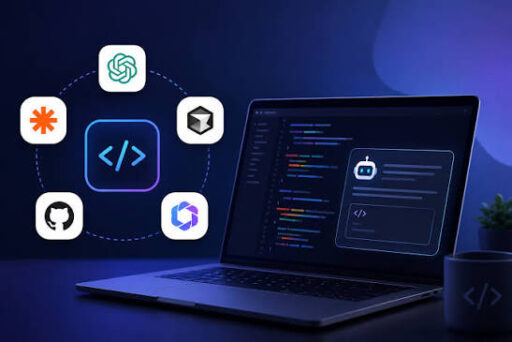
The best AI coding assistants in 2026 include GitHub Copilot, Cursor, Windsurf, ChatGPT, Claude, Google Gemini, Amazon Q Developer, Codeium, Tabnine, and Replit AI. These AI-powered development tools help programmers write code faster, debug applications, explain complex codebases, generate documentation, automate repetitive programming tasks, and improve software development productivity. Whether you are a beginner learning programming or an experienced software engineer building enterprise applications, choosing the right AI coding assistant depends on your programming language, workflow, IDE, collaboration needs, privacy requirements, and development goals.
Introduction
Artificial intelligence has fundamentally changed modern software development.
Developers no longer spend countless hours searching documentation, writing repetitive boilerplate code, debugging common errors, or manually explaining unfamiliar codebases.
Today’s AI coding assistants can generate complete functions, explain algorithms, detect bugs, optimize performance, suggest improvements, write documentation, generate unit tests, translate code between programming languages, and even help architects design entire software systems.
These tools are becoming an essential part of professional software development across startups, enterprises, universities, freelance projects, and open-source communities.
Organizations now use AI coding assistants to:
- Accelerate development
- Improve code quality
- Reduce repetitive work
- Increase developer productivity
- Speed up debugging
- Improve documentation
- Assist code reviews
- Support learning
- Build prototypes faster
- Enhance collaboration
However, not every AI coding assistant excels at the same tasks.
Some prioritize intelligent autocomplete.
Others specialize in large codebase understanding, conversational programming, debugging, enterprise security, or collaborative development.
Choosing the right assistant requires evaluating code quality, language support, IDE integration, reasoning ability, security, customization, performance, pricing, and developer workflow.
This comprehensive guide compares the best AI coding assistants in 2026 to help developers, businesses, students, educators, startups, and enterprise engineering teams select the ideal solution.
Why AI Coding Assistants Matter
Software development has become increasingly complex.
Modern developers work across multiple programming languages, frameworks, cloud platforms, APIs, databases, DevOps pipelines, and security standards.
AI coding assistants reduce cognitive load by automating repetitive tasks while helping developers solve problems more efficiently.
They can assist throughout the software development lifecycle, including:
- Planning
- Architecture
- Coding
- Refactoring
- Testing
- Debugging
- Documentation
- Deployment
- Maintenance
- Optimization
Rather than replacing developers, AI acts as an intelligent programming partner that enhances productivity and supports better decision-making.
What Are AI Coding Assistants?
AI coding assistants are software tools that use large language models and machine learning to help developers write, understand, improve, and maintain software.
Unlike traditional autocomplete systems, modern AI assistants understand programming context, project structure, documentation, and natural language instructions.
Depending on the platform, they can:
- Generate code
- Explain code
- Debug applications
- Refactor functions
- Suggest optimizations
- Create unit tests
- Write documentation
- Convert code between languages
- Build APIs
- Analyze repositories
Many platforms also integrate directly into popular IDEs and development environments, allowing developers to receive AI assistance without leaving their workflow.
How AI Is Transforming Software Development
Artificial intelligence now supports nearly every stage of modern programming.
Faster Code Generation
Developers spend less time writing repetitive code.
Better Problem Solving
AI explains unfamiliar concepts and suggests solutions.
Improved Debugging
Many coding assistants identify bugs and recommend fixes.
Higher Code Quality
AI recommends cleaner architecture and best practices.
Faster Learning
Students and junior developers receive immediate explanations and examples.
Increased Productivity
Teams complete projects more efficiently while reducing repetitive work.
Benefits of AI Coding Assistants
Organizations adopting AI-assisted development experience numerous advantages.
Accelerated Development
Build applications faster.
Better Documentation
Automatically generate technical documentation.
Faster Testing
Create unit and integration tests more efficiently.
Reduced Errors
Identify bugs earlier.
Easier Collaboration
Improve communication across engineering teams.
Continuous Learning
Developers gain insights while coding.
Responsible Use of AI Coding Assistants
Although AI significantly improves productivity, developers should always maintain human oversight.
Best practices include:
- Review generated code carefully.
- Test all AI-generated functions.
- Verify security recommendations.
- Protect confidential source code.
- Avoid exposing sensitive credentials.
- Follow secure coding standards.
- Validate performance optimizations.
- Review licensing implications when appropriate.
- Maintain documentation accuracy.
- Apply engineering judgment before deployment.
AI should support—not replace—professional software engineering practices.
How We Evaluated the Best AI Coding Assistants
Each platform was assessed using practical development criteria.
Code Quality
How accurate, maintainable, and production-ready is the generated code?
Context Awareness
Can the AI understand large projects and existing codebases?
Debugging
How effectively does it identify and resolve programming issues?
Programming Language Support
Does it perform well across multiple languages and frameworks?
IDE Integration
How seamlessly does it fit into existing development environments?
Ease of Use
Can beginners and experienced developers adopt it quickly?
Enterprise Readiness
Does it support professional engineering workflows and collaboration?
Overall Value
Does it provide strong capabilities relative to its cost?
Comparison Table: Best AI Coding Assistants in 2026
| AI Coding Assistant | Best For | Overall Rating |
|---|---|---|
| GitHub Copilot | Overall Coding | 9.9/10 |
| Cursor | AI-Powered IDE | 9.9/10 |
| Windsurf | Intelligent Development | 9.8/10 |
| ChatGPT | Programming Assistance | 9.8/10 |
| Claude | Code Reasoning | 9.8/10 |
| Google Gemini | Multi-Platform Development | 9.7/10 |
| Amazon Q Developer | AWS Development | 9.7/10 |
| Codeium | Free AI Coding | 9.7/10 |
| Tabnine | Code Completion | 9.6/10 |
| Replit AI | Cloud Development | 9.6/10 |
GitHub Copilot Review
Why GitHub Copilot Remains the Industry Standard
GitHub Copilot has become one of the most influential AI coding assistants by helping millions of developers generate code directly inside their favorite IDEs.
Built for professional software development, it provides intelligent code completion, function generation, documentation assistance, test creation, debugging support, and contextual programming suggestions.
Its deep integration with popular development environments enables developers to remain focused without constantly switching between documentation, search engines, and coding tools.
What Makes GitHub Copilot Different?
GitHub Copilot emphasizes seamless coding assistance within the development workflow.
Developers commonly use it for:
- Function generation
- API development
- Web applications
- Backend services
- Frontend development
- Unit testing
- Documentation
- Refactoring
- Code completion
- Debugging assistance
Its contextual understanding allows it to suggest relevant code while adapting to existing project structures.
Who Should Use GitHub Copilot?
GitHub Copilot performs particularly well for:
Professional Developers
Increasing daily coding productivity.
Enterprise Engineering Teams
Accelerating software delivery.
Web Developers
Building modern applications.
Full-Stack Engineers
Managing frontend and backend development.
Students
Learning programming with AI assistance.
Major Strengths
Intelligent Code Completion
Accurate context-aware suggestions.
IDE Integration
Works naturally inside popular development environments.
Productivity
Reduces repetitive coding tasks.
Language Support
Compatible with numerous programming languages.
Professional Workflow
Designed for real-world software engineering.
Why GitHub Copilot Is Ranked #1
GitHub Copilot combines intelligent code generation, excellent IDE integration, broad language support, and mature enterprise adoption, making it one of the most complete AI coding assistants available.
Cursor Review
Why Cursor Is Redefining the AI Code Editor
Cursor has rapidly become one of the most popular AI-powered development environments by embedding advanced AI directly into the coding experience.
Rather than acting only as an autocomplete tool, Cursor understands entire repositories, explains existing code, edits multiple files, performs intelligent refactoring, generates new features, and assists with debugging using natural language.
Its deep awareness of project context enables developers to work with complex codebases more efficiently while reducing repetitive manual tasks.
For many software engineers, Cursor represents the next generation of AI-assisted programming by combining the familiarity of a modern code editor with powerful conversational intelligence.
Cursor Review (Continued)
What Makes Cursor Different?
Cursor is designed as an AI-first code editor rather than a traditional IDE with AI features added later.
It combines conversational AI, intelligent code editing, repository understanding, code generation, debugging, documentation assistance, and multi-file editing into a single development workflow.
Developers commonly use Cursor for:
- Full-stack development
- Backend APIs
- Frontend applications
- Python projects
- JavaScript development
- React applications
- Database integration
- Bug fixing
- Code refactoring
- Documentation generation
Unlike simple autocomplete tools, Cursor understands the relationships between files, functions, classes, and project architecture.
Who Should Use Cursor?
Cursor performs particularly well for:
Full-Stack Developers
Managing complex applications.
Startup Teams
Building products rapidly.
Professional Engineers
Improving productivity.
AI Developers
Creating modern AI applications.
Advanced Programmers
Working with large repositories.
Major Strengths
Repository Understanding
Analyzes entire projects.
Multi-File Editing
Updates multiple files intelligently.
Conversational Coding
Natural language interaction.
Smart Refactoring
Improves existing code.
Excellent Productivity
Accelerates software development.
Limitations
New developers may need time to fully utilize its advanced repository-aware capabilities.
Final Verdict on Cursor
Cursor is one of the most powerful AI-powered code editors available, combining intelligent reasoning with deep project understanding for professional software development.
Windsurf Review
Why Windsurf Is Changing AI-Assisted Development
Windsurf introduces a collaborative AI development experience that goes beyond traditional autocomplete by actively understanding programming intent, project context, and engineering workflows.
Its intelligent assistance supports planning, implementation, debugging, optimization, documentation, and large-scale project management.
Many developers appreciate its ability to remain context-aware while assisting throughout the software development lifecycle.
What Makes Windsurf Different?
Windsurf emphasizes intelligent collaboration.
Developers commonly use it for:
- Web development
- Backend systems
- API development
- Mobile applications
- Database projects
- Cloud development
- DevOps workflows
- Software architecture
- Documentation
- Refactoring
Who Should Use Windsurf?
Windsurf performs particularly well for:
Software Engineers
Developing large projects.
Development Teams
Collaborating efficiently.
Startups
Accelerating product development.
Enterprise Developers
Managing production systems.
Cloud Engineers
Building scalable applications.
Major Strengths
Context Awareness
Understands complex projects.
Intelligent Collaboration
Supports development workflows.
Code Generation
Produces high-quality code.
Debugging Assistance
Identifies programming issues.
Productivity
Reduces repetitive engineering work.
Limitations
Some advanced enterprise workflows may require additional specialized tooling depending on organizational requirements.
Final Verdict on Windsurf
Windsurf is an excellent AI coding assistant for developers seeking an intelligent collaborative programming environment.
ChatGPT Review
Why ChatGPT Is One of the Most Versatile Coding Assistants
ChatGPT has become one of the most widely used AI programming assistants because it combines conversational reasoning with strong coding capabilities across hundreds of programming languages, frameworks, libraries, and technologies.
Rather than functioning only as an autocomplete tool, ChatGPT helps developers understand algorithms, explain code, solve bugs, generate documentation, design software architecture, optimize performance, and teach programming concepts.
Its flexibility makes it valuable for beginners, experienced developers, educators, startups, and enterprise teams alike.
What Makes ChatGPT Different?
ChatGPT emphasizes reasoning and problem-solving.
Developers commonly use it for:
- Code generation
- Debugging
- Learning programming
- Explaining algorithms
- Writing documentation
- API integration
- Database design
- Software architecture
- Code optimization
- Technical brainstorming
Who Should Use ChatGPT?
ChatGPT performs particularly well for:
Students
Learning programming concepts.
Professional Developers
Solving complex coding problems.
Educators
Teaching software development.
Entrepreneurs
Building prototypes.
Technical Teams
Planning software architecture.
Major Strengths
Excellent Reasoning
Handles complex programming questions.
Multi-Language Support
Works across many programming languages.
Strong Explanations
Helps developers understand code.
Flexible Conversations
Supports iterative development.
Broad Knowledge
Useful throughout the development lifecycle.
Limitations
Generated code should always be tested, reviewed, and validated before production deployment.
Final Verdict on ChatGPT
ChatGPT is one of the most flexible AI coding assistants available, offering powerful reasoning, debugging, learning support, and software design assistance.
Claude Review
Why Claude Excels at Code Understanding
Claude has earned a strong reputation among developers because of its ability to analyze large codebases, reason through complex software systems, and explain technical concepts with exceptional clarity.
Its long-context capabilities make it particularly valuable when reviewing documentation, understanding unfamiliar repositories, analyzing architecture, and improving existing applications.
Many engineers use Claude as a technical reviewer rather than simply a code generator.
What Makes Claude Different?
Claude specializes in thoughtful software reasoning.
Developers commonly use it for:
- Repository analysis
- Architecture review
- Documentation
- Refactoring
- Debugging
- Code explanation
- Security analysis
- API planning
- Performance optimization
- Technical writing
Who Should Use Claude?
Claude performs particularly well for:
Senior Engineers
Reviewing complex systems.
Architects
Planning scalable software.
Technical Writers
Creating documentation.
Security Teams
Reviewing code quality.
Development Managers
Understanding large repositories.
Major Strengths
Long Context
Processes extensive codebases.
Excellent Explanations
Clear technical reasoning.
Strong Refactoring
Improves maintainability.
Documentation Support
Generates high-quality technical content.
Thoughtful Analysis
Excellent architectural reasoning.
Limitations
Real-time IDE integration may vary depending on the development environment and workflow.
Final Verdict on Claude
Claude is one of the best AI assistants for understanding, reviewing, documenting, and improving complex software projects.
Comparing the Leading AI Coding Assistants
GitHub Copilot vs Cursor
GitHub Copilot focuses on seamless IDE integration and intelligent code completion.
Cursor expands the workflow with repository awareness, conversational editing, and AI-driven project management.
Cursor vs Windsurf
Cursor excels at multi-file editing and repository understanding.
Windsurf emphasizes collaborative development and intelligent workflow assistance.
ChatGPT vs Claude
ChatGPT offers exceptional flexibility across coding, debugging, education, and software design.
Claude specializes in long-context reasoning, documentation, and architectural analysis.
GitHub Copilot vs ChatGPT
GitHub Copilot integrates directly into coding workflows for continuous assistance.
ChatGPT provides broader conversational support for debugging, planning, architecture, learning, and complex programming discussions.
Building an Effective AI Development Workflow
Many professional developers combine multiple AI coding assistants to maximize productivity.
A practical workflow might include:
- ChatGPT for brainstorming, architecture, debugging, and prompt refinement.
- GitHub Copilot for real-time code completion.
- Cursor for repository-aware editing and feature implementation.
- Claude for documentation, code reviews, and architecture analysis.
- Windsurf for collaborative project development.
Combining specialized AI tools often delivers better results than relying on a single assistant.
Responsible AI Software Development
Professional software engineering still requires careful human oversight.
Developers should:
- Review AI-generated code thoroughly.
- Write comprehensive tests.
- Validate security practices.
- Protect confidential repositories.
- Avoid exposing secrets or credentials.
- Follow coding standards.
- Verify performance improvements.
- Maintain documentation accuracy.
- Conduct peer reviews.
- Confirm production readiness before deployment.
Responsible AI-assisted development produces higher-quality, more secure, and more maintainable software while preserving professional engineering standards.
Google Gemini Review
Why Google Gemini Is Becoming a Powerful Coding Assistant
Google Gemini has evolved into a capable AI development assistant that supports software engineers throughout the entire development lifecycle. It combines advanced reasoning, code generation, debugging, documentation, and integration with Google’s developer ecosystem.
Developers use Gemini to solve programming problems, generate production-ready code, understand unfamiliar frameworks, optimize applications, and accelerate software development across web, mobile, cloud, and AI projects.
Its ability to understand natural language while working across multiple programming languages makes it valuable for developers at every experience level.
What Makes Google Gemini Different?
Google Gemini combines conversational AI with developer-focused capabilities.
Developers commonly use it for:
- Python development
- JavaScript applications
- Web development
- Android development
- Cloud applications
- API integration
- Database queries
- Machine learning projects
- Documentation
- Debugging
Who Should Use Google Gemini?
Google Gemini performs particularly well for:
Web Developers
Building modern applications.
Android Developers
Creating mobile apps.
Cloud Engineers
Working with cloud-native services.
Students
Learning programming.
AI Developers
Building intelligent applications.
Major Strengths
Strong Reasoning
Solves complex programming problems.
Broad Language Support
Works across many programming languages.
Cloud Integration
Supports modern development environments.
Fast Learning Assistance
Explains technical concepts clearly.
Excellent Productivity
Accelerates software delivery.
Limitations
Developers should validate generated code before deploying it to production systems.
Final Verdict on Google Gemini
Google Gemini is an excellent AI coding assistant for developers seeking flexible programming support across multiple technologies.
Amazon Q Developer Review
Why Amazon Q Developer Excels in AWS Development
Amazon Q Developer is designed specifically for developers building applications on Amazon Web Services (AWS). It helps engineers generate cloud infrastructure, optimize AWS services, automate repetitive tasks, improve security, and accelerate cloud-native development.
Organizations using AWS benefit from its understanding of cloud architecture, infrastructure automation, deployment workflows, and enterprise software engineering.
What Makes Amazon Q Developer Different?
Amazon Q Developer specializes in cloud development.
Developers commonly use it for:
- AWS services
- Cloud infrastructure
- Serverless applications
- DevOps automation
- Security improvements
- Cloud architecture
- Infrastructure as Code
- Monitoring
- Deployment
- Cost optimization
Who Should Use Amazon Q Developer?
Amazon Q Developer performs particularly well for:
Cloud Engineers
Managing AWS infrastructure.
DevOps Teams
Automating deployments.
Enterprise Developers
Building scalable applications.
Solutions Architects
Designing cloud systems.
IT Operations Teams
Managing production environments.
Major Strengths
AWS Expertise
Optimized for Amazon cloud services.
Enterprise Security
Supports secure development.
Infrastructure Automation
Simplifies cloud deployment.
DevOps Integration
Improves engineering workflows.
Production Readiness
Designed for enterprise environments.
Limitations
Developers working primarily outside the AWS ecosystem may find broader-purpose coding assistants more suitable.
Final Verdict on Amazon Q Developer
Amazon Q Developer is one of the best AI coding assistants for AWS-focused development and enterprise cloud engineering.
Codeium Review
Why Codeium Is Popular Among Developers
Codeium has gained widespread adoption by providing fast AI-powered code completion, intelligent suggestions, and broad language support with an accessible pricing model.
Its lightweight experience makes it attractive for individual developers, students, startups, and engineering teams looking to improve coding productivity.
Many programmers choose Codeium as an alternative AI coding assistant for everyday development.
What Makes Codeium Different?
Codeium emphasizes speed and accessibility.
Developers commonly use it for:
- Code completion
- Function generation
- API development
- Web applications
- Mobile development
- Database programming
- Documentation
- Testing
- Refactoring
- Debugging
Who Should Use Codeium?
Codeium performs particularly well for:
Students
Learning programming.
Freelancers
Building client projects.
Startups
Accelerating development.
Independent Developers
Improving productivity.
Small Teams
Collaborating efficiently.
Major Strengths
Fast Suggestions
Responsive code completion.
Broad Language Support
Compatible with many programming languages.
Easy Adoption
Simple developer workflow.
Productivity
Reduces repetitive coding.
Cost Effective
Accessible for many users.
Limitations
Very large enterprise projects may benefit from additional repository-aware AI tools.
Final Verdict on Codeium
Codeium is an excellent AI coding assistant for developers seeking fast, efficient, and accessible coding assistance.
Tabnine Review
Why Tabnine Remains a Trusted AI Coding Tool
Tabnine has been one of the longest-standing AI code completion platforms and continues to help developers increase productivity through intelligent autocomplete and personalized coding suggestions.
Its privacy-focused approach and enterprise capabilities make it attractive for organizations with strict security requirements.
Many engineering teams appreciate its lightweight workflow and consistent coding assistance.
What Makes Tabnine Different?
Tabnine focuses on intelligent code completion.
Developers commonly use it for:
- Autocomplete
- Function generation
- Documentation
- Testing
- Refactoring
- API development
- Backend systems
- Frontend applications
- Database programming
- Software maintenance
Who Should Use Tabnine?
Tabnine performs particularly well for:
Enterprise Teams
Improving development efficiency.
Professional Developers
Writing production code.
Security-Conscious Organizations
Maintaining code privacy.
Backend Engineers
Building scalable systems.
Web Developers
Accelerating application development.
Major Strengths
Reliable Code Completion
Fast suggestions.
Enterprise Privacy
Supports secure workflows.
Lightweight Experience
Minimal disruption.
Multi-Language Support
Works across diverse technologies.
Mature Platform
Trusted by many developers.
Limitations
Developers seeking advanced conversational reasoning may also use broader AI assistants alongside Tabnine.
Final Verdict on Tabnine
Tabnine remains a dependable AI coding assistant for professional code completion and enterprise development.
Replit AI Review
Why Replit AI Simplifies Cloud Development
Replit AI integrates directly into the Replit online development platform, allowing developers to generate code, debug applications, explain errors, and deploy projects entirely from the browser.
Its cloud-native workflow makes programming accessible from almost any device without requiring complex local development environments.
This flexibility has made it especially popular among students, educators, startups, and rapid prototyping teams.
What Makes Replit AI Different?
Replit AI emphasizes cloud-based development.
Developers commonly use it for:
- Learning programming
- Web development
- Python projects
- JavaScript applications
- API development
- Rapid prototyping
- Team collaboration
- Education
- Coding interviews
- Hackathons
Who Should Use Replit AI?
Replit AI performs particularly well for:
Students
Learning to code online.
Educators
Teaching programming.
Startup Founders
Building prototypes.
Freelancers
Creating client projects.
Beginners
Practicing software development.
Major Strengths
Browser-Based Development
No local setup required.
AI Programming Assistance
Integrated coding support.
Collaboration
Excellent for teams and classrooms.
Rapid Prototyping
Build ideas quickly.
Easy Accessibility
Develop from anywhere.
Limitations
Large enterprise software projects often benefit from full-featured desktop IDEs and repository-aware development tools.
Final Verdict on Replit AI
Replit AI is one of the best AI coding assistants for cloud development, education, rapid prototyping, and beginner-friendly programming.
Best AI Coding Assistants for Beginners
Best Overall
ChatGPT
Easy explanations and interactive learning.
Best Beginner IDE
Replit AI
Simple cloud-based development.
Best Free Coding Assistant
Codeium
Accessible and productive.
Best AI Coding Assistants for Professional Developers
Best Overall
GitHub Copilot
Industry-leading productivity.
Best AI Code Editor
Cursor
Repository-aware development.
Best Enterprise Development
Claude
Excellent code understanding.
Best AI Coding Assistants for Web Development
Best Overall
GitHub Copilot
Strong frontend and backend support.
Best Full-Stack Development
Cursor
Excellent repository management.
Best Rapid Development
ChatGPT
Flexible programming assistance.
Best AI Coding Assistants for Python
Best Overall
ChatGPT
Powerful Python explanations and generation.
Best Professional Coding
GitHub Copilot
Efficient Python workflows.
Best AI Reasoning
Claude
Excellent code analysis.
Best AI Coding Assistants for JavaScript
Best Overall
GitHub Copilot
Outstanding JavaScript productivity.
Best Modern Development
Cursor
Repository-aware JavaScript editing.
Best Learning
ChatGPT
Excellent educational guidance.
Best AI Coding Assistants for Debugging
Best Overall
Claude
Exceptional reasoning and bug analysis.
Best Interactive Debugging
ChatGPT
Conversational troubleshooting.
Best IDE Assistance
Cursor
Project-wide debugging.
Best AI Coding Assistants for Code Generation
Best Overall
GitHub Copilot
Fast production-ready code.
Best Conversational Coding
ChatGPT
Natural language programming.
Best Multi-File Editing
Cursor
Advanced repository updates.
Best AI Coding Assistants for Code Reviews
Best Overall
Claude
Detailed architectural analysis.
Best Team Development
GitHub Copilot
Consistent code quality.
Best Repository Analysis
Cursor
Context-aware improvements.
Best AI Coding Assistants for Enterprise Teams
Best Overall
GitHub Copilot
Enterprise-ready development.
Best Cloud Engineering
Amazon Q Developer
AWS-focused organizations.
Best Security
Tabnine
Privacy-conscious development.
Best AI Coding Assistants for Learning Programming
Best Overall
ChatGPT
Interactive programming education.
Best Classroom Platform
Replit AI
Browser-based coding.
Best Beginner Productivity
Codeium
Accessible AI assistance.
Prompt Engineering for AI Coding Assistants
Why Better Prompts Produce Better Code
The quality of AI-generated code depends heavily on prompt clarity, technical detail, and project context.
Effective prompts should include:
- Programming language
- Framework
- Project requirements
- Desired functionality
- Input/output expectations
- Performance goals
- Security considerations
- Coding standards
- Error handling
- Testing requirements
- Documentation expectations
- Deployment environment
Example Prompt
“Create a production-ready REST API using Python and FastAPI for a task management application. Include JWT authentication, PostgreSQL integration with SQLAlchemy, input validation, pagination, error handling, OpenAPI documentation, unit tests with pytest, Docker configuration, and follow clean architecture principles with clear comments and type hints.”
Detailed prompts consistently generate higher-quality, more maintainable, and production-ready software.
GEO (Generative Engine Optimization) for AI Coding Assistant Content
Why GEO Matters for AI Coding Assistant Reviews
Search behavior is evolving rapidly as developers increasingly rely on AI-powered search engines and assistants for recommendations instead of browsing dozens of websites.
Today, users ask questions such as:
- Which AI coding assistant is best?
- What is the best AI for programming?
- Which AI coding tool is best for beginners?
- What AI helps with debugging?
- Which AI coding assistant works best with Python?
- What AI is best for web development?
- Which coding assistant supports enterprise teams?
- What AI coding tool understands large codebases?
Generative Engine Optimization (GEO) helps ensure your content is structured so AI systems can accurately understand, summarize, and recommend it.
A strong GEO article should include:
- Detailed software reviews
- Feature comparisons
- Use-case recommendations
- Practical examples
- Comparison tables
- Frequently asked questions
- Strengths and weaknesses
- Workflow explanations
- Expert insights
- Regular updates
Publishing comprehensive developer-focused content through Techno Park Ai increases topical authority and improves visibility across AI-powered search experiences.
Building Topical Authority
Rather than creating isolated reviews, build an interconnected AI and developer ecosystem.
Recommended supporting content includes:
- Best AI Coding Assistants
- Best AI Website Builders
- Best AI Development Tools
- Best AI Chatbots
- Best AI Productivity Tools
- Best AI Automation Tools
- Best AI Code Generators
- Best AI Testing Tools
- Best AI DevOps Tools
- Best AI Cybersecurity Tools
- AI Prompt Engineering Guide
- Future of Software Development
A strong internal-linking structure improves semantic relevance, crawlability, engagement, and long-term organic visibility.
Entity Optimization
Consistently covering leading AI development tools helps search engines and AI assistants recognize expertise.
Key entities covered throughout this guide include:
- GitHub Copilot
- Cursor
- Windsurf
- ChatGPT
- Claude
- Google Gemini
- Amazon Q Developer
- Codeium
- Tabnine
- Replit AI
Supporting concepts such as code generation, debugging, software architecture, testing, DevOps, cloud computing, APIs, repository management, security, documentation, and programming education reinforce topical depth.
Keeping AI Coding Assistant Content Updated
AI development tools evolve extremely quickly.
To maintain authority and freshness:
- Update rankings after major releases.
- Review new coding assistants.
- Refresh pricing and subscription information.
- Add workflow tutorials.
- Expand prompt engineering examples.
- Cover new IDE integrations.
- Update enterprise security features.
- Add developer case studies.
- Refresh comparison tables.
- Revise recommendations based on hands-on testing.
Regular updates improve trust, relevance, and visibility in both traditional and AI-powered search systems.
AEO (Answer Engine Optimization)
What Is AEO?
Answer Engine Optimization structures content so search engines and AI assistants can quickly provide direct answers to user questions.
Strong AEO content begins with concise answers before providing detailed explanations.
AEO Best Practices
Answer Questions Immediately
Provide a direct response before diving into details.
Write Conversationally
Use natural language similar to how developers search online:
- Which AI coding assistant is best?
- What AI helps programmers?
- Which AI is best for Python?
- What AI helps with debugging?
- Which coding assistant understands repositories?
- What AI is best for beginners?
Cover Related Search Intent
Include discussions about code generation, debugging, testing, architecture, documentation, DevOps, cloud development, enterprise usage, and programming education.
Expand FAQs
Answer common questions thoroughly so AI assistants can easily surface accurate information.
EEAT (Experience, Expertise, Authoritativeness, Trustworthiness)
Why EEAT Matters
Software development directly impacts business operations, application security, scalability, performance, and customer experience.
Developers need trustworthy recommendations before integrating AI into professional workflows.
Strong EEAT builds long-term credibility.
Experience
Evaluate coding assistants using real-world development tasks such as:
- Building APIs
- Web development
- Mobile applications
- Cloud infrastructure
- Debugging
- Unit testing
- Documentation
- Refactoring
- DevOps workflows
- Enterprise software
Hands-on testing provides practical recommendations readers can trust.
Expertise
Demonstrate knowledge in:
- Software engineering
- Programming languages
- System architecture
- Cloud computing
- Security
- Databases
- DevOps
- Testing
- Documentation
- Performance optimization
Deep technical expertise improves recommendation quality.
Authoritativeness
Publishing comprehensive reviews, tutorials, workflow guides, coding best practices, and developer resources positions Techno Park Ai as a trusted destination for AI-powered software development content.
Trustworthiness
Present balanced evaluations, explain strengths and limitations, encourage code review, discuss security considerations, and recommend testing before deployment.
Transparency creates long-term trust.
The Future of AI Coding Assistants
Better Repository Understanding
Future AI systems will understand entire applications, dependencies, architecture, and business logic with greater accuracy.
Autonomous Development Workflows
AI will increasingly automate repetitive engineering tasks such as testing, refactoring, documentation, deployment preparation, and code maintenance.
Improved Debugging
Future assistants will identify root causes more accurately and recommend higher-quality fixes.
Stronger Security Analysis
AI will help developers identify vulnerabilities before software reaches production.
Personalized Development
Coding assistants will adapt to individual coding styles, project requirements, and team standards.
Deeper IDE Integration
AI capabilities will become increasingly integrated into professional development environments.
Human Engineers Will Remain Essential
AI accelerates development, but creativity, architecture, business understanding, engineering judgment, leadership, and strategic decision-making remain fundamentally human strengths.
The most successful software teams will combine AI productivity with human expertise.
Frequently Asked Questions
What is an AI coding assistant?
An AI coding assistant is software that helps developers write, understand, debug, optimize, and maintain code using artificial intelligence.
Which AI coding assistant is best in 2026?
GitHub Copilot, Cursor, Windsurf, ChatGPT, Claude, Google Gemini, Amazon Q Developer, Codeium, Tabnine, and Replit AI are among the leading solutions.
Which AI coding assistant is best for beginners?
ChatGPT, Replit AI, and Codeium provide beginner-friendly experiences with strong educational value.
Which AI coding assistant is best for professional developers?
GitHub Copilot, Cursor, Claude, and Windsurf are widely used by professional engineering teams.
Which AI coding assistant is best for Python?
ChatGPT, GitHub Copilot, and Claude perform exceptionally well with Python development.
Which AI coding assistant is best for JavaScript?
GitHub Copilot and Cursor are particularly effective for JavaScript and modern web development.
Can AI write complete applications?
AI can generate substantial portions of applications, but human developers should review, test, secure, and maintain the software.
Can AI replace programmers?
AI improves productivity but does not replace software engineers. Human expertise remains essential for architecture, security, strategy, and decision-making.
Which AI coding assistant is best for debugging?
Claude, ChatGPT, and Cursor provide excellent debugging assistance.
Which AI coding assistant is best for enterprise teams?
GitHub Copilot, Amazon Q Developer, Tabnine, and Claude offer strong enterprise capabilities.
Final Rankings
Best Overall AI Coding Assistant
GitHub Copilot
Best AI Code Editor
Cursor
Best AI IDE
Windsurf
Best AI Coding Assistant for Learning
ChatGPT
Best AI for Code Understanding
Claude
Best AI for Multi-Platform Development
Google Gemini
Best AI for AWS Development
Amazon Q Developer
Best Free AI Coding Assistant
Codeium
Best Enterprise Code Completion Tool
Tabnine
Best Cloud-Based Coding Platform
Replit AI
Final Verdict
AI coding assistants have fundamentally changed software development by helping developers write code faster, debug more effectively, understand complex systems, generate documentation, automate repetitive tasks, and improve productivity.
GitHub Copilot continues to lead in real-time coding assistance, Cursor excels at repository-aware development, Windsurf enhances collaborative engineering workflows, ChatGPT provides flexible programming support, Claude offers exceptional reasoning and code analysis, Google Gemini supports multi-platform development, Amazon Q Developer specializes in AWS environments, Codeium delivers strong accessibility, Tabnine prioritizes enterprise productivity, and Replit AI simplifies cloud-based programming.
The ideal coding assistant depends on your experience level, programming languages, development workflow, security requirements, and project complexity.
Conclusion
Artificial intelligence has become one of the most valuable productivity tools available to modern software developers.
Whether you are building web applications, cloud infrastructure, mobile apps, APIs, machine learning systems, enterprise software, or educational projects, AI coding assistants can dramatically reduce development time while improving efficiency.
However, successful software development still depends on engineering judgment, security awareness, testing, architecture, problem-solving, and human creativity.
AI enhances the development process, but professional expertise remains essential for building reliable, secure, scalable software.
At Techno Park Ai, our mission is to help developers, startups, businesses, educators, students, and technology leaders navigate the rapidly evolving world of artificial intelligence.
Through in-depth reviews, practical tutorials, workflow guides, software comparisons, and continuously updated educational resources, Techno Park Ai empowers readers to choose the right AI tools and build smarter development workflows.
As AI-powered programming continues to evolve, Techno Park Ai will remain committed to delivering trustworthy, experience-driven content that helps readers stay informed, productive, and competitive in the future of software development.